How to Choose Profitable Wholesale Beauty Products?
Profit in the beauty business does not come from buying the cheapest products and hoping customers will buy them. That is a weak strategy, and in a crowded market, it can quickly become an expensive mistake. Profitable beauty retailing requires sharper decisions: choosing products with proven demand, healthy margins, reliable quality, flexible purchasing options, and enough differentiation to keep customers coming back.
The beauty market is enormous, but not every product deserves a place in your inventory. A product can look attractive, trend heavily on social media, and still sit on a shelf for months. The real question is not simply, “Is this product popular?” It is, “Can I buy it at the right cost, sell it consistently, and reorder it without creating unnecessary risk?”
This is where Wholesale Beauty Products become strategically important. A strong wholesale supplier can give retailers, salons, online sellers, beauty stores, nail technicians, hairstylists, and professional beauty businesses access to a broad product range at competitive wholesale prices. Instead of dealing with dozens of disconnected suppliers, businesses can build a more efficient purchasing system around one integrated beauty supply chain.
However, choosing profitable products requires more than browsing a catalog. You need to evaluate demand, customer behavior, product quality, pricing, packaging, trends, and sales channels before placing a serious order.
Start With Demand, Not With a Cheap Price
The first rule of profitable wholesale purchasing is brutally simple: do not buy products just because they are cheap. A low unit price means nothing if the product does not sell. Dead inventory ties up cash, consumes storage space, and eventually forces you to discount products simply to get rid of them.
Start by identifying the customers you actually want to serve. A cosmetics boutique may need different products from a professional salon. An online beauty store may focus on trendy, visually appealing products, while a neighborhood beauty supply shop may prioritize practical products with repeat-purchase potential.
Product variety is one of the major advantages of the wholesale beauty sector. A comprehensive supplier may offer makeup, skincare, fragrances, nail products, wigs, hair extensions, beauty tools, personal care items, and packaging products. This makes it possible to create complementary product combinations instead of relying on one category.
Fragrance, for example, can be particularly attractive when selected carefully. Retailers serving women may consider Wholesale Womens Cologne, while stores targeting male customers can explore Men's Cologne Wholesale. Smaller fragrance formats can also work well for gift stores, travel-oriented retailers, and impulse purchases. Mini Fragrances Wholesale allows businesses to test fragrance demand without committing large amounts of capital to full-size inventory.
Fragrance oils can offer another flexible category. Wholesale Fragrance Oil products can appeal to customers interested in personal fragrance, beauty routines, and fragrance-related products. But profitability still depends on quality, packaging, scent selection, compliance, and customer demand. Never assume that every low-cost fragrance product will generate a high return.
The same principle applies to makeup. Wholesale Lip Gloss can be attractive because lip products are relatively easy to display, ship, and promote online. Yet the winning products are usually those with desirable shades, appealing packaging, reliable formulas, and pricing that leaves enough room for retail profit.
The smartest approach is to build a product mix around three levels: proven sellers, trend-driven products, and experimental products. Proven sellers provide stability. Trending products create opportunities for faster growth. Experimental products allow you to test new demand without betting the entire purchasing budget.
Calculate Margin, Turnover, and Total Cost
A profitable product is not necessarily the product with the highest markup. What matters is the relationship between purchase cost, selling price, operating expenses, and inventory turnover.
Suppose one product costs $5 wholesale and sells for $15. On paper, the margin looks excellent. But if it takes six months to sell, its performance may be weaker than a product that costs $8 and sells for $16 every few weeks. Inventory turnover matters because cash trapped in unsold products cannot be used to purchase your next successful product.
Before placing a wholesale order, calculate the complete cost. Include the wholesale price, shipping, packaging, customs or import expenses when applicable, payment fees, platform fees, advertising costs, and potential returns. A product that appears profitable at the supplier level can become far less attractive after these expenses are included.
This is especially important for hair products, where product value can vary dramatically according to material, length, texture, construction, and quality. Bulk Wigs can provide attractive opportunities for beauty supply stores and online sellers because wigs cover multiple styles, customer preferences, and price points. But buying large quantities simply to obtain a lower unit price is dangerous if the styles become outdated or the quality fails to meet customer expectations.
Hair extensions require the same discipline. Bulk Human Hair for Braiding can be useful for salons, braiding specialists, and beauty supply retailers that serve customers seeking protective hairstyles. Meanwhile, Extension Hair Wholesale gives businesses opportunities to stock multiple lengths, textures, colors, and attachment methods. The key is to understand which specifications your customers actually purchase instead of building inventory based on assumptions.
Haircare tools can create another profitable category because they complement hair products and can increase the value of each customer transaction. Wholesale Haircare Tools may include styling accessories, brushes, combs, dryers, and other practical tools depending on the supplier's catalog. These products can be sold individually or bundled with wigs, extensions, and haircare products.
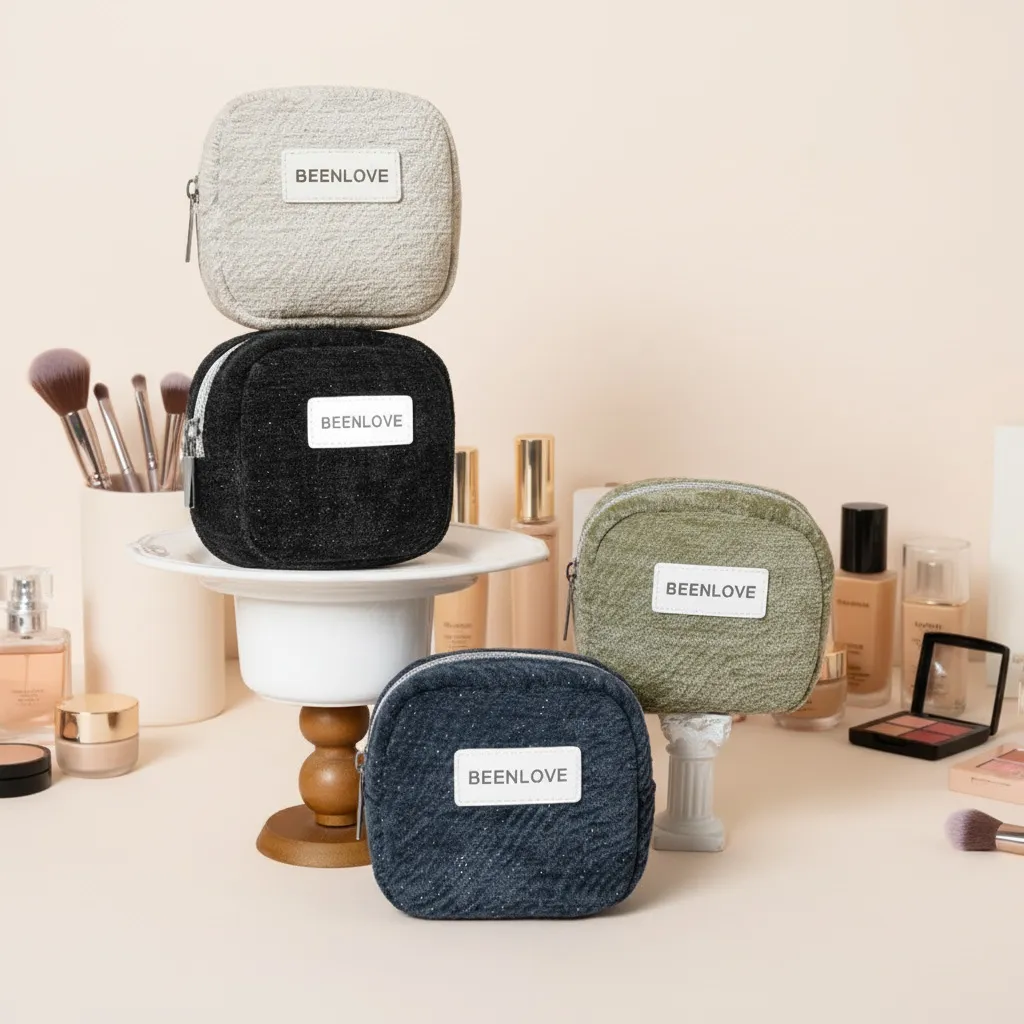
Do not ignore accessories and packaging either. Bulk Makeup Bags can work as standalone retail products, promotional items, gift additions, or bundle components. Their profitability depends heavily on design, durability, size, and perceived value. A simple product becomes commercially useful when it supports a larger purchasing strategy.
The same logic applies to packaging. Businesses selling skincare or private-label cosmetics may need reliable Wholesale Cosmetic Jars Suppliers to maintain consistent packaging quality and brand presentation. Packaging is not merely a container. In beauty retail, it influences customer perception, product positioning, and the credibility of a brand.
Follow Trends Without Becoming Their Victim
Beauty trends move fast. That creates opportunity, but it also creates danger.
A product that dominates social media today may become irrelevant surprisingly quickly. Retailers that blindly chase every viral product often end up with warehouses full of yesterday's trends. Smart wholesalers do something different: they use trends to identify opportunities, then test demand before scaling inventory.
Look for products that combine trend appeal with lasting usefulness. Certain makeup categories, fragrance formats, nail products, hair accessories, and beauty tools can remain commercially relevant even as specific colors and styles change.
Product selection should also be flexible. A good wholesale supplier should allow buyers to filter products by category, brand, material, color, specification, packaging, and product type. This flexibility helps businesses create targeted collections rather than purchasing random assortments.
Trend analysis should also consider geography and customer demographics. European, American, Asian, and other beauty markets may respond differently to colors, fragrance profiles, hairstyles, packaging designs, and cosmetic preferences. If you sell internationally, do not assume that a product popular in one market will automatically perform well elsewhere.
Another major advantage of modern wholesale beauty sourcing is the ability to support multiple sales channels. Beauty products can be sold through physical cosmetics stores, salons, nail studios, hair salons, boutiques, online stores, marketplaces, social commerce platforms, and professional beauty businesses. A product that performs poorly in one channel may perform strongly in another.
For online sellers, visual presentation matters enormously. Products with attractive packaging, clear benefits, distinctive designs, and strong demonstration potential are often easier to promote through social media. Makeup, wigs, nail products, fragrance products, and beauty tools can all benefit from video demonstrations and before-and-after content.
But never confuse visibility with profitability. Viral attention can create a temporary sales spike, while repeat customers create a business.
That is why retailers should track several numbers rather than focusing only on revenue: sell-through rate, gross margin, repeat-purchase rate, return rate, average order value, and inventory age. These numbers tell you which products deserve more investment and which ones should be eliminated.
Choose Suppliers That Can Support Long-Term Growth
Even the best product strategy will collapse if the supplier is unreliable. Wholesale beauty sourcing is ultimately a supply-chain decision, not merely a shopping decision.
A dependable supplier should provide clear product information, consistent quality, professional packaging, realistic lead times, and responsive communication. Beauty and personal care products require particular attention to ingredients, manufacturing standards, labeling, packaging, and quality control. Cutting corners in these areas can create customer complaints, returns, reputational damage, or regulatory problems.
Ask suppliers for relevant product specifications, ingredient information, packaging details, certifications or compliance documentation where applicable, and quality-control information. Do not accept vague promises such as “high quality” as proof. Quality needs to be demonstrated through consistent products and transparent information.
Purchasing flexibility is equally important. A growing business may begin with small wholesale orders and later move toward larger purchases. Suppliers that support both small-batch and bulk purchasing can make this transition easier. Long-term supply relationships can also help businesses maintain consistent inventory instead of constantly searching for replacement vendors.
International sourcing requires even more attention. Shipping times, customs procedures, import requirements, packaging standards, taxes, and logistics costs can significantly affect profitability. A supplier capable of supporting international wholesale purchasing and logistics can reduce unnecessary complexity, especially for cross-border e-commerce businesses.
Private-label and OEM/ODM opportunities are another factor worth considering. If your long-term goal is to build a recognizable beauty brand, simply reselling generic products may not be enough. Custom packaging, private labeling, product formulation, and brand-specific designs can help businesses differentiate themselves from competitors.
But customization should come after market validation, not before it. There is little value in spending heavily on custom packaging for a product that has never proven its sales potential. Test the market first. Scale the winners second. Customize strategically third.
Ultimately, profitable wholesale beauty purchasing is about discipline. Choose products based on real customer demand. Compare total costs instead of chasing low unit prices. Balance evergreen products with carefully tested trends. Monitor inventory turnover. Protect quality. And choose suppliers capable of supporting your business as it grows.
A strong wholesale catalog gives you possibilities, but possibilities are not profits. Profit comes from selecting the right products, buying them at the right cost, selling them through the right channels, and reordering only when the numbers justify it.
That is the real advantage of a well-managed Wholesale Beauty Products strategy: not simply having more products, but having the right products, at the right price, for the right customers, at the right time.


评论
发表评论